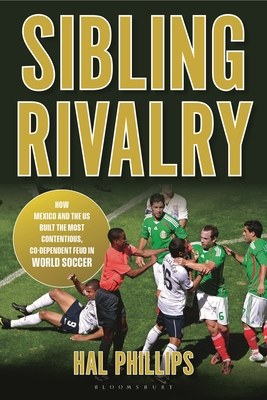
THE UNITED STATES and MEXICO are bound together by history, culture and geography. Whether they want to be or not. This complex relationship is nowhere more visible than on the soccer field, and in the stands. With his new book, Sibling Rivalry, Hal Phillips shows why USA vs. Mexico soccer is more than a match. It’s an ongoing family drama proving that rivalry is a uniquely compelling form of intimacy. Phillips investigates the fluid, centuries-old associations between the two nations, on field and off. He explores byzantine border dynamics, shared economic anxieties, and the North American Derby’s stunning evolution from a one-sided “nothing-burger” to an intensely contested, ever-escalating blood feud. The partisans are front and center here, but Phillips also draws on the personal narratives of transnational players and fans, breathing more life and nuance into this thoroughly North American story…
Click the icons below to sample recent content featuring Hal and Sibling Rivalry. Scroll up to the top nav for the SR Blog and book excerpts.






Graham Zusi, the North American Derby's 21st-century Patron Saint. Click the image or visit the EXCERPTS in top nav to learn more about Graham's unlikely canonization.

Sometimes More is Better: Defending FIFA’s 48-team World Cup
Few folks would dare express public admiration for FIFA. Only newly beholden soccer association officials carrying suitcases full cash do that. In fact, open disdain for the Fédération Internationale de Football Association may be the only thing that unites proper fans in all 211 member nations. However, in its unquenchable lust for revenue, FIFA has stumbled into a purple-patch of decision-making this summer. Its 48-team World Cup tournament, newly expanded from the 32-team standard, is working. A field of 64 may work better still. Know this: I had been dead set against this expansion. One just assumes that money-grubbing on the FIFA scale cannot be redeemed. Yet the first month has sobered up millions of 48-team skeptics like myself. Group-stage matches in the U.S., Canada and Mexico played out more like a final stage of qualifying — a surprisingly competitive, player-friendly, three-week introduction to knockout play, which suffered zero letdowns on account of the new Round of 32. Taken together, the entire tableau has proved better contested, more diverse, more deliberately executed, and [...]
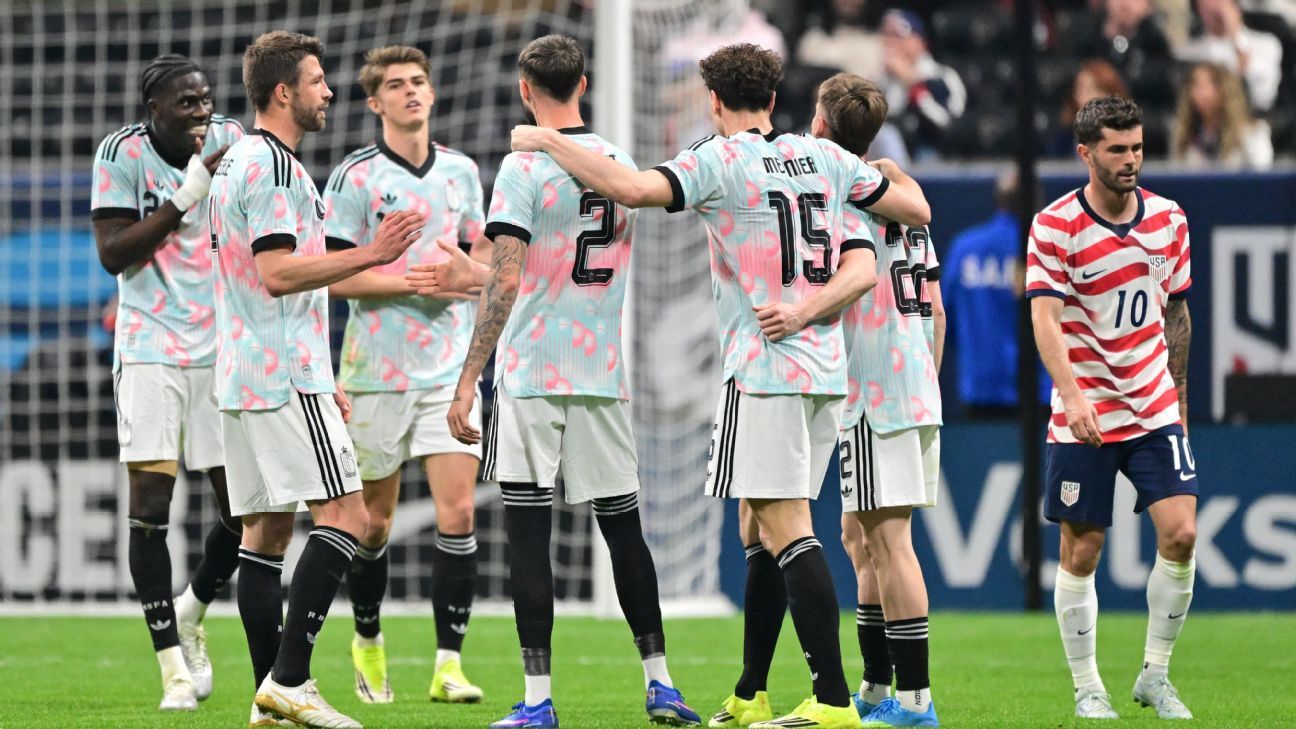
Belgium traps USMNT in Waffle House of Horrors
Monday night’s USMNT exit was gutting, but we shouldn’t be too surprised. We knew Tim Ream, for all his qualities, was playing on borrowed time. We knew there a howler coming from such an inexperienced keeper. And we knew there would be massive karmic fallout from Dear Leader’s vainglorious meddling. But I wasn’t expecting the Yanks to go all deer in the headlights. The warning signs flashed red in the very first minute. Matt Freese made his “save of the tournament,” denying Timothy Castagne. Yet the moment that created that moment saw the U.S. defense dither like 12-year-olds before Christian Pulisic failed to clear — and failed to clear TO THE FLANK. Déjà vu in the 9th min: Freeman’s clearing header was a) poor, and b) not directed away from goal. It landed (something a ball in the box should never do) near the 18 where three U.S. defenders just… froze. Trossard didn’t, slipped to the touchline and crossed to Charles de Ketelaere for the tap in. That’s scandalous defending and it wasn’t [...]

