A New World Guide to Sensible World Cup Expectations
A New World Guide to Sensible World Cup Expectations
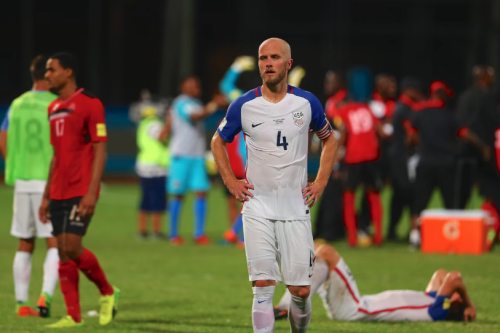
I was rereading and search-engine optimizing some older essays last week, when I came across a column from early October 2017. To be precise, the piece was written two frantic days after the USMNT failed to qualify for the 2018 World Cup in Russia. That remains, you may recall, a dire moment in what I call the “modern history” of U.S. soccer. With the men’s national team preparing to host another Mundial — another tournament it didn’t qualify for, to be clear — those 8-year-old observations underline sensible World Cup expectations for the pending competition.
American soccer media, such as it is, has grown up in the meantime. It has dispensed with the “Will America win a World Cup by 2022, 2026 or 2030?” banter. I think we better understand — as a media horde, as a futbol-watching population — that national team programs don’t compete for world titles merely because they set their minds to this goal and/or throw resources at it.
But what do we call it, this overt expectation mongering? You’ve heard it: If the U.S. doesn’t make the quarterfinals, the tournament is a failure. It’s part prognostication, part click-bait, part speculative autopsy. Pundits would argue they are holding the current team, the federation and system to account. However we may describe it, such noise does little manage and realistically shape expectations.
Accordingly, see here a few meaty excerpts from that 2017 post mortem, interspersed with attempts at establishing the true stakes this summer. The older bits are bold-faced. Here’s the 8-year-old lead:
COUVA, Trinidad (Oct. 13, 2017) — Instead of asking where U.S. Soccer goes from here, let’s take a moment to first understand where we are, and why. In short: Dropping the Oct. 10 match to Trinidad & Tobago here at Ato Bolden Stadium, thereby failing to qualify for this summer’s Russian World Cup, does not change America’s standing in the soccer world.
I would say the same for The Netherlands, which also crashed out of Russia 2018 qualifying last week — the second straight major-tournament qualification failure for one of the planet’s traditional powers. Chile — reigning Copa America champions, runners-up at last summer’s Confederations Cup — also failed to qualify for Russia, too. So did mighty Italy, qualifiers for every WC finals since 1958.
As I’ve written before, international football is hard. Failures like Tuesday’s debacle in Trinidad happen each and every World Cup (and European Championship) cycle, to perfectly capable footballing nations.
World Cup Expectations: Honest is the Best Policy
Eight years on, I would add that Italy miss the 2022 Mundial in Qatar, as well. In March 2026, they couldn’t beat Bosnia-Herzegovina in a playoff. This summer the Azzurri will watch their third straight World Cup from home.
In all honesty, I seek perspective on such matters for myself and for all fans of the USMNT because Mauricio Pochettino’s squad, newly named as of May 26, has not warmed up for this tournament in encouraging fashion.
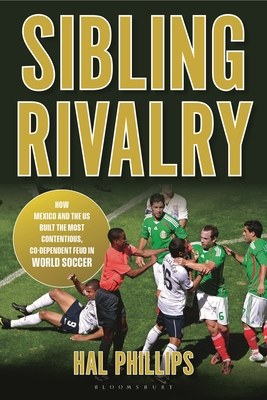
In my new book, “Sibling Rivalry,” I devote many words to how and why Americans struggle to understand the basic building blocks of international sport, including the FIFA World Cup. We don’t often engage in such things, frankly; our biggest sports are almost entirely domestic in scope. Before 1990, our culture had little to no contact with the World Cup in particular.
So, let’s be honest with ourselves — just as I labored to be honest in the dreadful moments of October 2017. These words were true then. They are true today, no matter how the USMNT might perform this summer:
In the grand scheme of things, despite the Catastrophe in Couva, the USMNT is still competing in the “modern” era of American soccer. That’s remains the state of play thanks to a generation of 50- and 60-something players who, almost exactly 28 years earlier (on the same Caribbean Island), qualified their country for the 1990 World Cup in Italy.
Reach the Knockouts, Take your Chances
From that moment forward, U.S. Soccer, which had operated for 40 years as an irrelevant footballing nation, graduated into the company of legit soccer nations, i.e. those that qualify for World Cup finals with regularity and harbor reasonable expectations of advancing out of the group stage. Here’s the proof of this evolution: Italia ‘90 marked the first of seven straight World Cup appearances for the U.S., four of which did not end until the knockout stage.
To argue that missing the 2018 World Cup “shows everything is wrong with the United States doesn’t follow. This [the loss in Couva] doesn’t prove that,” Stephan Szymanski confirmed to The New York Times this week. Symanski, co-author of the insightful book series, Soccernomics, is among the keenest futbol observers on the planet. The NYT called on him to supply some much needed perspective.
“Stuff happens. It’s the nature of the game and not necessarily surprising to see the U.S. knocked out. This is what being a soccer fan is like. You’re prone to the extreme event all the time. There’s no royal road, unless you’re Brazil or Germany.”
All true. Back then and still today.
But I interrupt myself:
Not going to Russia truly sucks, on multiple levels. While it may well prove a “teachable moment” for the U.S. soccer establishment, and a chance to cede the field to a new, younger cohort of professionals, we are obliged to remain clear-eyed about how international football operates. If possible, we should examine and, ideally, leverage this failure to qualify as a pivotal moment.
Because it does represent a pivotal moment. Just not the one you may think.
This is the immediate challenge for American soccer in its evolution as a proper footballing nation: helping our domestic league make the leap from its current position (afterthought) to something that truly engages domestic fans from season to season, between World Cups, entirely apart from U.S. Men’s National Team fortunes.
I’m pretty confident that come the Qatar World Cup of 2022, the U.S. will be there with a newly minted generation of capable footballers. If American fans essentially check out until then, to the detriment of MLS, soccer in this country has bigger problems than we know.
So much has gone right since 2018
I’m reprinting such big hunks of this old essay because it’s super gratifying to be so right! The USMNT did develop a new, younger core of players. In 2026, we can safely say that no U.S. World Cup roster was ever chosen from a deeper pool of talent.
Yet the ultimate thrust of that 2017 column had nothing to do with World Cups. With no Mundial on the 2018 calendar, it was incumbent on Major League Soccer to make a leap in quality and eyeballs-attracted. It has taken those great leaps forward.
• In 2017, there were 22 MLS clubs. Today there are 30.
• In 2023, the league partnered with a less wealthy but higher-quality LigaMX to create regular, continental club competition — The Leagues Cup — that annually spotlights North America’s biggest draw, its best rivalry, U.S. vs. Mexico.
• In the 8-plus years since Couva, only five leagues on Earth annually draw more spectators than MLS.
In short, U.S. Soccer’s in a good place. A very good place. Take it from someone who came of age in the 1980s when what we enjoy today was literally unimaginable.
So, listen: We all recognize the USMNT isn’t playing so well ahead of this World Cup, its potent performance vs. Senegal on May 31 notwithstanding. Anything can happen in a tournament setting, and we’re playing at home. But all I seem to hear is, “The U.S. needs to win a Round of 16 match, if this World Cup is to be a success.”
In the end, this is click-bait, a collection of rabble-rousing claptrap. And I said as much in 2017.
We must maintain a proper sense of proportion. And this does not make me a USMNT apologist. No one freaks out and calls for the dismantling of national futbol establishments when Sweden, or Uruguay, or Bulgaria or South Korea or Wales or Greece fails to qualify for a World Cup, or when they exit one “early”. Because this sort of tournament failure happens all the time in the hyper competitive, generationally dependent realm of world football.
For the record, all of those nations listed directly above have reached the semifinals of, or won, major tournaments since 1994, whereas the U.S. never has.
What does that tell us?
It tells us that Symanski is right. The U.S. graduated from the pool of true also-rans in 1990. Since that time, it has enjoyed a quite successful 25-year period of success. That’s not a “run of form” — it’s who we are now.
The USMNT, unlike the Women’s National Team, has not yet graduated to the elite level because, well, that is extraordinarily difficult. In a century, only eight nations have ever won a men’s World Cup. Eight!
The most recent country to elevate itself in this way? Probably France, where the process began with a golden generation, led by Michel Platini during the early 1980s. And perhaps Spain, which did nothing internationally — in terms of major tournament results — until its own game-changing generation came of age in 2008.
Failing to join this elite cohort is no indictment of American footballing infrastructure. It may well never happen in our lifetimes. It might happen in time for the 2026 World Cup, be over by 2028, at which point we recede back into the huge pool of non-elites. Sorry, but that’s just how it works.
Exceptionalism does not Apply
It’s very difficult tackle this subject of U.S. soccer expectations without referring in some way, shape or form to Exceptionalism — this idea that we should be elite at soccer because we Americans believe we’re elite at everything, once we put our minds to it. By now, in 2026, we should understand this is a bunch of hooey.
In sport, we lost the last World Baseball Classic to Venezuela, in March (Japan beat us in the previous tournament). In another sport we invented, basketball, our beet players show up only for Olympic competitions. NBA clubs don’t engage at all with their counterparts abroad, yet blithely declare themselves World Champions. (And oh, by the way, four of the five players named first team All-NBA last week were foreign-born.) American football dominates our sporting culture, but literally no one plays this game outside our borders, save a few Canadians.
Nations that test themselves internationally with such remarkable rarity cannot be blamed for naiveté, yet neither would a World Cup exit during the round of 16 (my prediction) represent evidence of sporting failure or a “broken system”.
Neither would such a result be evidence of coaching treachery administrative incompetence — something Americans allege with alarming frequency. NYT columnist Lydia Polgren shared this fascinating perspective in April 2026:
In December 1952, a Scottish scholar named Denis Brogan published a remarkable essay titled “The Illusion of American Omnipotence.” Writing as the United States was emerging as the world’s pre-eminent power, Brogan diagnosed a peculiar feature of the American mind. The United States, fueled by its myths and unswervingly certain of its vision for the world, could not see difficulty, much less defeat, as a reason to question its aims. Failure was never brought about through the strength or power of rivals. It came, instead, through blunder and betrayal.
“Very many Americans, it seems to me, find it inconceivable that an American policy, announced and carried out by the American government, acting with the support of the American people, does not immediately succeed,” Brogan wrote. “If it does not, this, they feel, must be because of stupidity or treason.” An admiring but canny observer of the country, Brogan captured something essential. America, in its own imagination, could never fail; it could only be failed.
That rings true to me. Which means, members of the USMNT will not fail us if they don’t perform up to snuff this summer. They may never win a World Cup. The Dutch, the Colombians and the Portuguese (my dark horse come July) haven’t either. Italy or Uruguay may never win again. No country from Africa, North America or the entirety of Asia have ever come close, including the two most populous nations on earth. Massive countries (save Brazil) traditionally have a terrible time even qualifying for, much less competing at World Cups.
Which also means, our course is clear: Rroot for the U.S. because you’re an American. Hope for the best. Get drunk and watch alongside your countrymen and women. (There are no fan zones when the U.S. plays FIBA championships or Olympic gold medal hockey games, after all.) Congratulate the opponent if and when one takes us down. Luxuriate in the fact that we’re finally seated at the table. Settle in and enjoy the small victories, America.
In the near term, armed with this perspective, imagine how excited we’d be — how impressed the world futbol community would be — should the Yanks win that round of 16 match.
These are the reasonable hopes, the true stakes.