Two Bitter Rivalries Take Flight, Right Before Our Eyes
Two Bitter Rivalries Take Flight, Right Before Our Eyes
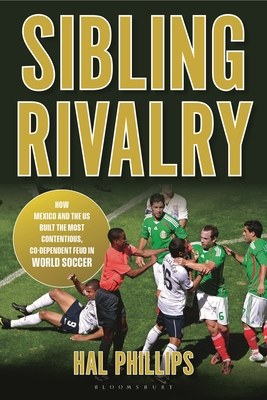
In the pages of Sibling Rivalry, I examine not just U.S. vs. Mexico, but also rivalry itself as a sporting phenomenon. Because we humans tend to tribalize so enthusiastically, rivalry is a consistent, almost inevitable outgrowth of these identity politics. Rivalries don’t typically evolve in symmetric fashion, however. It took the U.S. nearly 50 years to understand and participate in its soccer rivalry with our southern neighbor. In Mexico, it took a single loss in the first match, back in 1934.
In March, we watched two bitter rivalries take flight, right before our eyes.
We observed the spontaneous, combustible birth of a new futbol derby, one that will smolder with great intensity in the years to come. One burning question in particular was lit by Morocco’s bureaucratic plucking the 2025 Cup of Nations title from opponent Senegal — 57 days after the Lions of Teranga beat the Lions of Atlas in January’s final: When will these two prides next play? Because I will fly to Dakar or Rabat for that match. More likely, I will fly to a neutral site because staging that instant clásico will be dicey. They may have to play the rematch in Iceland.
First the answer: The women representing Maroq & Senegal will play on July 31. They were paired in the same 2026 African Cup of Nations group. Expect triple security from tournament organizer CAF, the Confederation of African Football. With both governments loudly crying foul — over the decision to hand host Morocco the trophy; over Senegal’s decision to parade the original trophy around Europe during the recent international break — it’s hard to see how this doesn’t further spill over into continental club tournaments, into qualifying for future Cups of Nations and World Cups.
The truth is, the men’s derby was already formidable: These are arguably the two finest sides in Africa, but their rivalry is more than that. It’s also Muslim vs. Christian, North vs. sub-Saharan, haves vs. have-nots. Now this.
The Moroccans had a technical case — the Senegalese left the field for 10 minutes, protesting a dubious penalty awarded deep in added time — but I still can’t believe the tournament hosts went through with this protest. It makes them look so bad, so petty. It makes CAF and African futbol look so bad, so chaotic and corrupt. The women will play in July only because CAF had postponed that tournament, twice!
The irony is, whenever the men’s derby is renewed, it will be ugly. And appointment viewing, for we humans can’t help but rubberneck such things.
U.S. Still Flails in International Waters
I also devote many pages to how the U.S. vs. Mexico soccer phenomenon has trained up American sports culture in the joys and obligations of international sport. The NBA Dream Team first showed that Americans do possess this capability, but soccer has done most of the heavy lifting the last 30+ years.
In March, the World Baseball Classic showed how far we Americans still have to go.
The stubborn insularity of U.S. sports culture was on full display when Venezuela came back to beat the U.S. in a thrilling, intense final, 2-1, on March 17. Baseball is our game, right? Our national pastime? Well, 90 percent of the fans in Miami for the WBC final were Venezuelan!
And congratulations to them. Venezuelans have never won anything on the global, or even the regional sporting stage. But they understand international sport (and, if we consider the politics, their victory also poked the Trump administration straight in the eye). Mexican Americans famously fill any U.S. stadium where El Tri, the Mexican national soccer team, happens to play, whatever the stakes. Yet anyone who believed that was a soccer-specific problem wasn’t watching the WBC final.
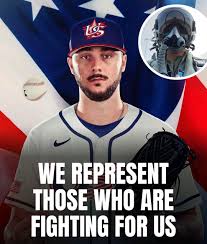
As we’ve seen in the aftermath of Morocco’s dubious Cup of Nations reversal, the politics can be hard to separate from international sport. Some have chided Fox TV and MLB for interweaving political nationalism with the WBC final telecast: The U.S. squad walked into the stadium in overtly martial fashion. On social media, pitcher Paul Skenes claimed that he and his teammates represented “those who are fighting for us.” A former member of SEAL Team 6 gave the squad a pre-final pep talk. This sort of military cosplay and hubris only show how stunted we Americans remain in our ability to understand or appreciate international competition.
I expect the loss to Venezuela will oblige Major League Baseball to take this competition even more seriously. That’s a good thing. Our national pastime deserves a proper world championship tournament. But let’s lose the martial bearing and rhetoric next time. And fans: Let’s show up.